Why Is My Check Engine Light On? The 5 Most Common Culprits (And How to Fix Them)
Jan 22, 2026
Hi, we're MyWagons. We provide owner reviews of cars for extended reliability data and personal opinions of the real owners. Take a look by searching a car, or continue reading the article.
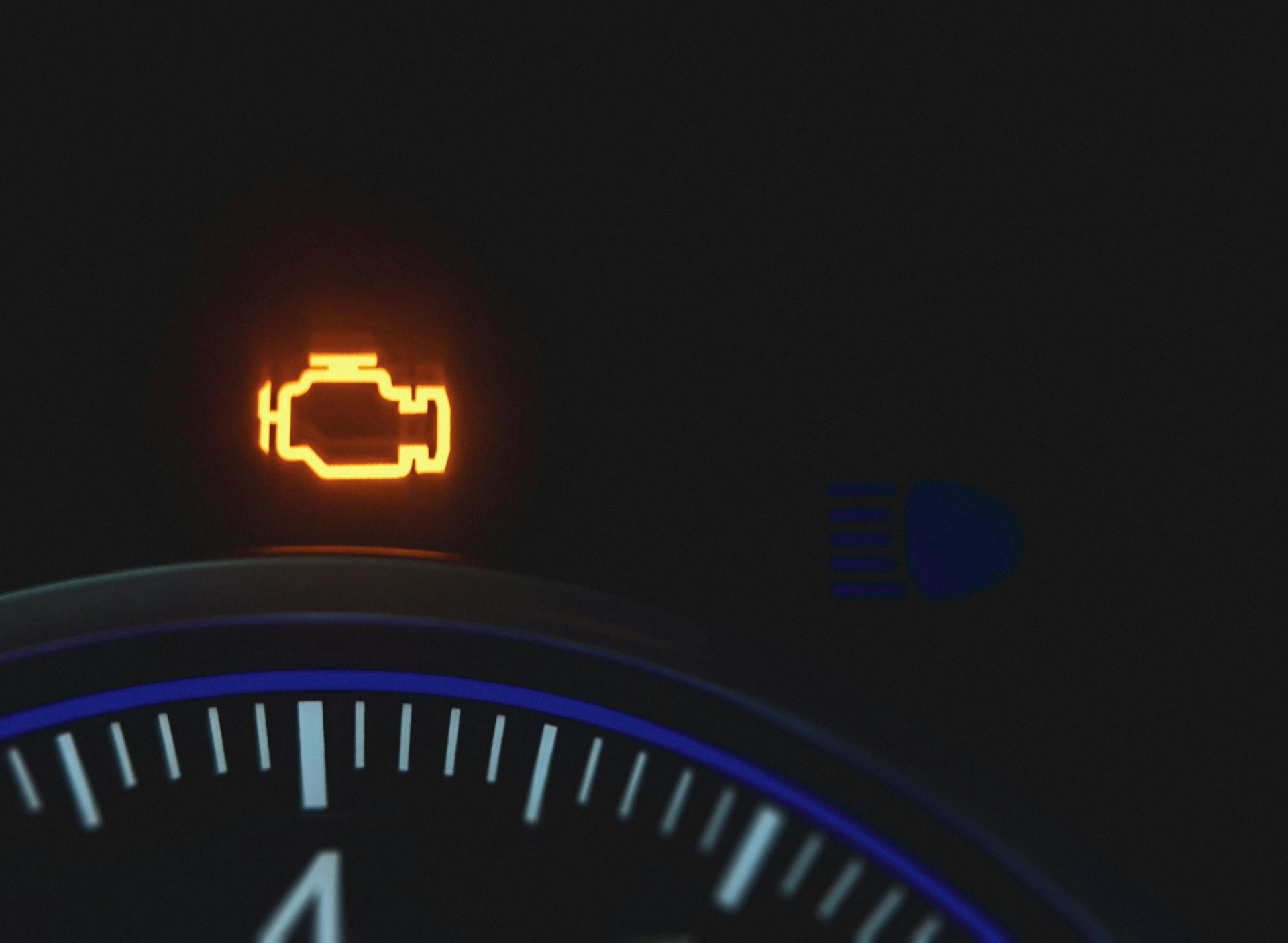
It happens to the best of us. You’re cruising down the highway, music playing, minding your own business, when suddenly, an orange symbol pops up on your dashboard. Your stomach drops. It’s the dreaded check engine light.
Immediate panic sets in. Is the engine about to explode? Is this going to cost me my entire savings account? Should I pull over right now?
First, take a deep breath. While that little amber engine icon is the universal symbol for "something is wrong," it rarely means "your car is about to self-destruct." In the modern automotive world, the check engine light (often abbreviated as CEL) is part of your car’s On-Board Diagnostics (OBD-II) system. It’s essentially your car’s computer gently—or not so gently—telling you that one of its many sensors has picked up a reading that is out of the normal range.
Sometimes, the fix is as free and simple as tightening a cap. Other times, it’s a warning sign of a part that is wearing out and needs attention before it causes expensive damage.
In this guide, we are going to walk through the five most common reasons that light turns on, how to diagnose it, and what you need to do to get it turned off.
Understanding the Warning: Solid vs. Flashing
Before we dive into the specific parts that might be failing, we need to make a very important distinction. Not all check engine lights are created equal. The behavior of the light itself tells you how urgent the problem is.
If the light is solid (steady): This is the most common scenario. It means the computer has detected a problem, but it’s not an immediate emergency. You can continue driving your car, but you should get it checked out as soon as possible. Don’t ignore it for months, or a minor repair could turn into a major overhaul.
If the light is flashing (blinking): This is the "pull over now" signal. A flashing check engine light usually indicates a severe engine misfire that is dumping unburned fuel into your exhaust system. This can quickly overheat and destroy your catalytic converter (a very expensive part we will discuss later) or cause engine damage. If the light is blinking, stop driving as soon as it is safe to do so and call a tow truck.
Assuming your light is solid, let’s look at the usual suspects.
1. The Gas Cap: The "Silly" Fix That Saves You Money
Believe it or not, one of the most frequent reasons for a check engine light is also the cheapest to fix. It’s your gas cap.
We often think of the gas cap just as a lid to keep the fuel inside the tank so it doesn't slosh out when we take a sharp turn. While that is true, the gas cap plays a crucial role in your car’s evaporative emissions system (EVAP). The fuel system in modern cars is pressurized and sealed to prevent gasoline fumes from escaping into the atmosphere.
If your gas cap is loose, cracked, or if the rubber seal around it has worn out, the system can't maintain the necessary pressure. The sensors detect a "vacuum leak" or a loss of pressure, and the computer assumes there is a leak in the fuel lines. Boom—check engine light.
Common Symptoms:
Check engine light is on.
You recently filled up the gas tank.
There are usually no drivability issues; the car feels fine.
The Fix: If the light popped on shortly after a visit to the gas station, pull over and check the cap. Unscrew it and screw it back on until you hear it click. In some cars, it takes a few drive cycles (turning the car on, driving, and turning it off) for the computer to re-check the system and turn the light off automatically.
If the cap is tightened but the light stays on, inspect the cap for cracks or a dried-out rubber gasket. A replacement gas cap usually costs between $15 and $25 at any auto parts store and is the easiest DIY repair you will ever do.
2. The Oxygen (O2) Sensor: The Fuel Monitor
If the gas cap isn’t the issue, the next most likely culprit is an oxygen sensor. Your car likely has two to four of these sensors, depending on the engine type (V6 and V8 engines usually have more).
The O2 sensor has a very specific job: it sits in your exhaust pipe and measures the amount of unburned oxygen in the exhaust gases. It sends this data back to the car’s computer, which then adjusts the fuel mixture entering the engine. It’s a constant balancing act. The engine wants the perfect "Goldilocks" ratio of air and fuel for efficient combustion.
Over time, O2 sensors get covered in oil ash or carbon byproducts, reducing their ability to change the fuel mixture accurately. When a sensor fails, the computer has to guess how much fuel to inject, which usually results in it playing it safe and injecting too much.
Common Symptoms:
Reduced gas mileage: This is the big one. If your car suddenly seems thirstier than usual, this is a prime suspect.
Rough idling: The engine might sound a bit uneven when you are stopped at a red light.
Failed emissions test: You will not pass a smog check with a bad O2 sensor.
The Fix: You can drive with a bad O2 sensor for a little while, but you shouldn't ignore it. Running the engine with the wrong fuel mixture can eventually damage the spark plugs and the catalytic converter.
Replacing an O2 sensor is a common repair. The part itself can range from $20 to $100 depending on your vehicle make and model. If you are handy, you can often rent an "O2 sensor socket" from an auto parts store and do it yourself, as they just screw into the exhaust pipe. However, they can be rusted in place due to the high heat of the exhaust, making them stubborn to remove. A mechanic might charge between $150 and $300 for parts and labor.
3. The Catalytic Converter: The Expensive Consequence
This is the one you don't want it to be. The catalytic converter is an essential part of your exhaust system. Its job is to turn harmful carbon monoxide and other gases into harmless compounds before they leave the tailpipe. It’s an environmental superhero, but it’s also filled with precious metals like platinum and palladium, making it incredibly expensive.
Here is the kicker: Catalytic converters rarely fail on their own. They are designed to last the life of the vehicle. Usually, they fail because you ignored another problem—like a bad O2 sensor or a bad spark plug—for too long. When an engine runs poorly, it dumps unburned fuel into the exhaust. This fuel hits the super-heated catalytic converter and burns inside it, melting the delicate honeycomb structure inside.
Common Symptoms:
Reduced performance: Your car feels sluggish, like it has no power when you press the gas pedal.
Dark exhaust smoke.
Rotten egg smell: This is the classic sign. If you walk behind your running car and smell sulfur or rotten eggs, your catalytic converter is likely clogged or failing.
Heat coming from the floor: In extreme cases, a clogged converter traps heat, making the floor of your car feel hot.
The Fix: There is no "repair" for a bad catalytic converter; it must be replaced. Because of the precious metals inside, this is pricey. Expect to pay anywhere from $1,000 to over $2,500 depending on the car. This is why fixing that $50 O2 sensor immediately is so important—it protects the $2,000 converter.
4. Mass Air Flow (MAF) Sensor: The Air Traffic Controller
For an engine to run, it needs air and fuel. We’ve talked about the fuel side, but the air side is just as critical. The Mass Air Flow (MAF) sensor measures the amount of air entering the engine.
Think of the MAF sensor as the doorman. It counts the air molecules coming in and tells the computer, "Okay, we have this much air, so send in this much fuel." If the MAF sensor is dirty or broken, the computer gets bad data. It might think there is way more (or way less) air than there actually is, causing the engine to run poorly.
The most common reason for MAF failure isn't that the part is broken, but that it’s dirty. It sits right behind your air filter. If you haven't changed your air filter in a long time, dust and debris can bypass it and coat the MAF sensor.
Common Symptoms:
Stalling: The car might start but then immediately die.
Jerking or hesitation: When you try to accelerate, the car might stumble or jerk forward.
Hard starting: The engine turns over but struggles to catch.
Drag on the engine: The idle might feel very low or unstable.
The Fix: This is often a DIY-friendly situation. Before you replace the sensor, try cleaning it. You can buy a can of "Mass Air Flow Sensor Cleaner" (do not use brake cleaner or carburetor cleaner, as these are too harsh) for under $10. You essentially remove the sensor, spray it down to remove the grime, let it dry, and reinstall it.
If cleaning doesn’t work, the sensor itself may have failed electronically. Replacement costs vary wildly, from $100 to $400, but it is usually a simple "plug and play" repair that takes ten minutes with a screwdriver.
5. Spark Plugs and Ignition Coils: The Fire Starters
Your engine works on a principle of internal combustion. For combustion to happen, you need a spark to ignite the air/fuel mixture in the cylinders. That is the job of the spark plugs and ignition coils.
The ignition coil provides the electricity, and the spark plug creates the arc. Over time, spark plugs wear out. The metal tip burns away, widening the gap across which the spark must jump. Eventually, the spark is too weak to ignite the fuel, or it fails to happen at all. This is called a "misfire."
A misfire feels terrible. The car will shake or shudder, and you can often hear a popping sound from the exhaust.
Common Symptoms:
Engine stuttering: The car feels like it is tripping over its own feet.
Poor acceleration: You step on the gas, but the car reluctantly picks up speed.
Engine vibration: When stopped, the steering wheel might vibrate more than usual.
Flashing Check Engine Light: As mentioned earlier, severe misfires can cause the light to blink.
The Fix: Spark plugs are maintenance items, meaning they are supposed to be replaced at regular intervals (usually every 30,000 to 100,000 miles, depending on if your car uses copper, platinum, or iridium plugs).
This is one of the cheapest performance boosts you can give an older car. A new set of spark plugs is inexpensive (typically $10-$20 per plug) and can often be installed at home if you have a ratchet set. Ignition coils are a bit more expensive ($50-$100 each), but usually, you only need to replace the one that failed.
If you have a P0300 series code (like P0301, P0302), the last number tells you exactly which cylinder is misfiring, making it easy to identify which plug or coil is the problem.
How to Find Out Which One It Is (Without Guessing)
So, you know the top 5 suspects, but how do you know which one is haunting your dashboard? You don't want to just start throwing parts at the car hoping one of them works. That gets expensive fast.
You need to read the code.
When the check engine light comes on, the car’s computer stores a "Trouble Code." You need an OBD-II scanner to read it. You have two options here:
1. The Free Option: Almost every major auto parts chain (AutoZone, O'Reilly, Advance Auto Parts, etc.) offers free check engine light scanning. You just walk in, ask for a scan, and they will plug a device into your car, print out the code, and often give you a receipt that says "Most Likely Solution: Replace O2 Sensor." It is a fantastic free resource.
2. The DIY Option: You can buy your own OBD-II scanner. Basic ones cost less than $30 online. You plug it into the port under your dashboard (usually near your knees on the driver's side), and it displays a code like "P0442." You can then Google that code along with your car’s make and model to see exactly what is wrong.
Can I Just Clear the Code and Keep Driving?
Technically, yes. If you have a scanner, you can press a button to "erase codes," and the light will turn off.
However, this rarely fixes the problem. The light isn't the problem; the light is the messenger. If you clear the code without fixing the issue, the light will just come back on as soon as the car runs its self-diagnostics again—usually within 50 miles. Plus, if you live in a state with emissions testing, clearing the code right before the test won't work. The testing computers can tell that the system was recently reset and isn't "ready," resulting in an automatic failure.
Summary of the Codes
Just to give you a head start, here is a cheat sheet of what codes you might see for the issues we discussed:
Gas Cap / EVAP System: P0440, P0442, P0455, P0456, P0457.
O2 Sensor: P0130 through P0175.
Catalytic Converter: P0420, P0430.
Mass Air Flow Sensor: P0101, P0171, P0174 (Lean codes).
Misfires (Spark Plugs/Coils): P0300, P0301, P0302, etc.
Seeing that check engine light is never fun, but it doesn't have to be a nightmare. Modern cars are incredibly good at telling us what is wrong with them; we just have to listen. Start with the gas cap, get the code scanned, and tackle the issue before it grows into a converter-melting catastrophe. Your car (and your wallet) will thank you in the long run.