The Facelifted Hyundai Ioniq 6 2026 is Close, but Has It Fixed Its Biggest Issue?
Jan 15, 2026
Hi, we're MyWagons. We provide owner reviews of cars for extended reliability data and personal opinions of the real owners. Take a look by searching a car, or continue reading the article.
The Hyundai Ioniq 6 has always been a polarizing masterpiece of aerodynamic efficiency. Since its debut, it has managed to claw away market share from the Tesla Model 3 by offering a unique "streamliner" aesthetic and charging speeds that most other EVs in its price bracket simply cannot touch. But for all its slippery drag coefficients and futuristic cabin lights, a dark cloud has hung over the E-GMP platform that underpins it. That cloud is the Integrated Charging Control Unit, or the ICCU.
As we look at the 2026 facelift, the aesthetic changes are bold and the battery upgrades are impressive. However, for the thousands of owners who have sat in the dark on the side of a highway waiting for a tow truck, the only question that matters is whether Hyundai has finally exercised the ghost in the machine. To understand if the 2026 model is truly a safe bet, we have to look at the mechanical heart of the update, not just the new "shark-nose" front end.
The ICCU Crisis: Understanding the Ghost in the Machine
The ICCU is essentially the brain that manages how the car takes in power from a charger and how it distributes that power to the 12-volt battery that runs your lights, screens, and safety systems. When it fails, the car typically gives a "Check Electric Vehicle System" warning, followed by a sudden loss of motive power.
In the 2023 through 2025 model years, this became a widespread nightmare. A transistor inside the unit would essentially "pop" due to overvoltage or thermal stress, turning a $50,000 high-tech sedan into a very expensive paperweight. For the 2026 facelift, Hyundai engineers have reportedly moved beyond the "patch and pray" software updates that characterized the 2024 recalls.
The new model is expected to carry a revised hardware revision of the ICCU assembly. This updated hardware is designed with better thermal dissipation and more robust electrical components to handle the spikes that occur during the hand-off between high-voltage charging and the 12-volt system. While Hyundai hasn’t issued a press release explicitly titled "We Fixed the ICCU," the quiet transition to a new part number in the 2026 production line tells the story that everyone wanted to hear.
Bigger Battery and Enhanced Range
Beyond the mechanical triage, the 2026 Ioniq 6 is a significantly better car on paper. The most notable change is the battery. Inheriting the 84.0 kWh pack from the refreshed Ioniq 5 and the Kia EV6, the Long Range variants are seeing a healthy bump in capacity from the previous 77.4 kWh.
In a car as aerodynamic as the Ioniq 6, this extra energy goes a long way. Real-world range is expected to climb toward the 350-mile mark (EPA) for the most efficient rear-wheel-drive configurations, making it one of the longest-legged EVs on the market today.
Design Evolution: The "Shark-Nose" Facelift
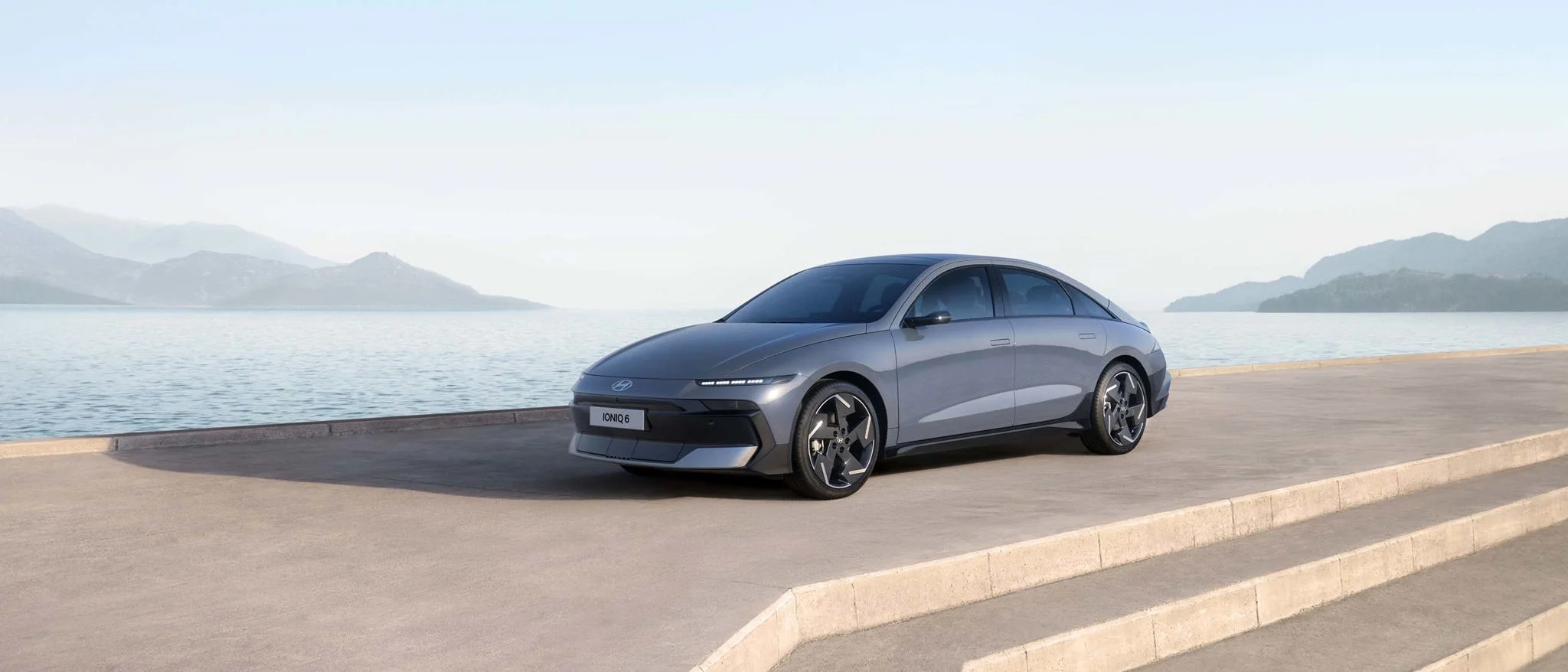
Visually, the 2026 facelift is a departure from the "bug-eyed" look of the original. The front fascia has been sharpened with a higher hood line and split LED lighting elements.
New DRLs: The daytime running lights now sit higher, while the main projectors are tucked lower into a more aggressive, angular bumper.
Improved Stance: It gives the car a wider, more planted stance that feels less like a science experiment and more like a premium sports sedan.
Rear Refinement: The "whale tail" spoiler from the original has been refined into a sleeker ducktail lip, reducing the visual clutter at the rear without sacrificing the car's record-breaking low drag coefficient.
Interior Ergonomics: The Return of the Button
Inside the cabin, Hyundai has listened to the vocal minority of drivers who hate "touch everything" interfaces. The 2026 interior sees the return of several physical buttons. You now have dedicated tactile switches for frequently used features like:
Heated and ventilated seats
Parking cameras
Heated steering wheel
The center console has also been reconfigured; the wireless charging pad has been repositioned to be more accessible, and the window switches—which were oddly placed in the center on previous models—have migrated back to the door panels where most humans expect them to be.
Software and Performance: NACS and the "N" Factor
Tech-wise, the 2026 model finally adopts Hyundai’s ccNC (connected car Navigation Cockpit) infotainment system. This is a massive win for users because it finally allows for wireless Apple CarPlay and Android Auto across all trim levels. The new software is snappier, supports better over-the-air (OTA) updates, and allows the car to pre-condition the battery for fast charging more intelligently based on live navigation data.
The performance enthusiasts have something to look forward to as well. 2026 marks the arrival of the Ioniq 6 N-Line and the full-fat Ioniq 6 N. While the N-Line is mostly a visual package, the Ioniq 6 N is set to be a monster, sharing the dual-motor, 641-horsepower setup found in the Ioniq 5 N.
Is 2026 the Safe Bet?
The skepticism surrounding the ICCU is justified. In late 2025, even after several software "fixes," some owners were still reporting failures. The 2026 model is the first true opportunity for Hyundai to prove they have solved the issue at the hardware level. The consensus among technical circles is that the combination of the new 84 kWh battery and the revised power electronics represents a "Generation 2" of the E-GMP platform.
If you are a prospective buyer sitting on the fence, the 2026 model year is the one to wait for. It isn't just about the sharper headlights or the bigger battery; it's about the maturity of the platform. The shift to a native NACS (Tesla-style) charging port for the North American market also adds a layer of future-proofing that makes the 2026 model far more attractive than the 2024 or 2025 versions left on dealer lots.
By addressing the ICCU vulnerabilities with new hardware and refining the interior ergonomics, Hyundai is positioning the 2026 Ioniq 6 as a refined, "v2.0" product. It remains the most efficient, fastest-charging sedan in its class, and if the ICCU fix holds up, it will be the undisputed king of the mainstream electric market. With the 2026 updates, Hyundai has finally smoothed out the rough edges that kept this electric streamliner from greatness.