Screen Overload: Are 40-Inch Dashboards a Safety Hazard or the Future of Driving?
Jan 11, 2026
Hi, we're MyWagons. We provide owner reviews of cars for extended reliability data and personal opinions of the real owners. Take a look by searching a car, or continue reading the article.
The Glow of the Modern Cockpit
Step into a high-end showroom in 2026, and you might think you’ve accidentally walked into a Best Buy. The days of the "dashboard"—a simple leather or plastic shelf housing a few gauges and a glovebox—are officially over. In its place, we have the "Display Wall."
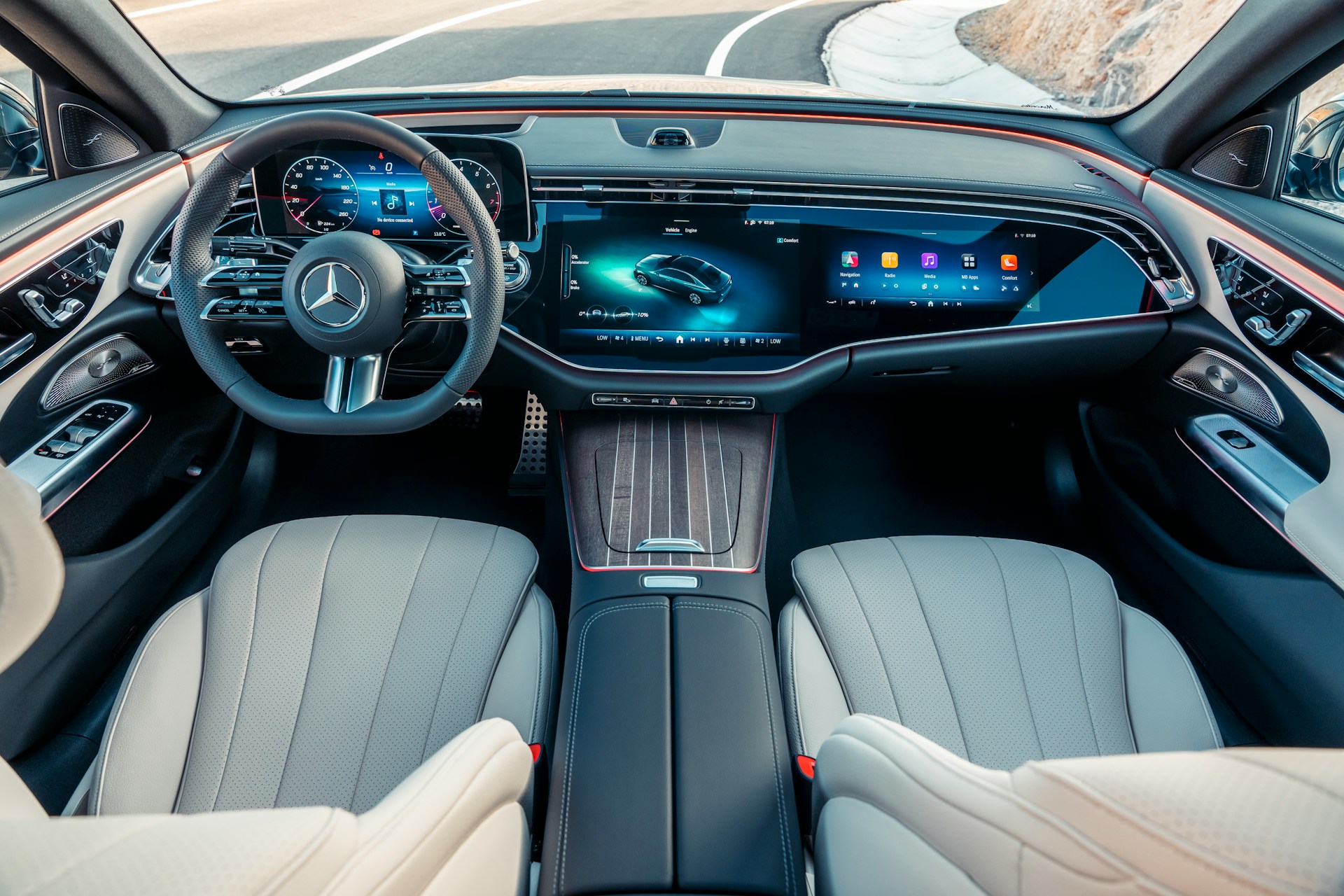
Whether it’s the 56-inch Mercedes-Benz MBUX Hyperscreen, the pillar-to-pillar displays in the latest Lincolns, or the triple-screen arrays found in emerging brands like BYD, the interior of the modern car is defined by pixels. We are surrounded by high-definition OLEDs that control everything from our suspension settings to our seat massagers and, increasingly, our entertainment.
But as these screens have grown, so has a heated debate among engineers, safety advocates, and frustrated drivers: Have we reached "Peak Screen"? Are these massive displays the ultimate expression of automotive luxury, or are they a multi-billion dollar safety hazard that is making our roads more dangerous than ever?
Welcome to the 2026 dashboard wars.
Part 1: The Arms Race of Pixels
The journey to the 40-inch dashboard didn't happen overnight. It started with the "Tesla effect"—the realization in the mid-2010s that a single large tablet could replace hundreds of expensive, mechanical buttons. Automakers quickly realized that screens weren't just "cool"; they were incredibly cost-effective.
By 2026, the screen has moved from a central tablet to a total architectural element. We now see:
Pillar-to-Pillar Displays: Seamless glass panels that stretch from the driver's side A-pillar all the way to the passenger's.
Passenger Screens: Dedicated displays that allow the co-pilot to stream Netflix or play games, often with "digital blinkers" that prevent the driver from seeing the content and becoming distracted.
Haptic Control Centers: Even the climate controls and window switches are being swallowed by touch-sensitive glass.
The justification from automakers is always the same: Customization. A screen can be whatever you want it to be. It can be a navigation map one second and a diagnostic tool for your engine's gas efficiency the next. In a world where "Software-Defined Vehicles" are the new norm, the screen is the face of the car's soul.
Part 2: The Safety Crisis – 42% More Lane Drift
While the marketing brochures highlight the "immersive experience," the data from the real world is starting to tell a darker story.
A landmark study released in late 2025 by the University of Washington, in partnership with several major automakers, provided the "smoking gun" that safety advocates had been looking for. The study utilized high-fidelity simulators and eye-tracking technology to measure how drivers interact with large-format touchscreens compared to traditional buttons.
The results were staggering: Drivers drifted side-to-side in their lanes 42% more often when performing "simple" tasks on a touchscreen—such as adjusting the temperature or changing a radio station—compared to using physical dials.
The reason is biological. Humans possess "proprioception"—the ability to know where our limbs are and what they are touching without looking at them. You can reach for a volume knob while keeping your eyes on the road because your brain "knows" where it is and your fingers can feel the click of the dial. You cannot "feel" a digital slider on a glass screen. You must look at it to confirm your finger is in the right place.
In the two seconds it takes to find the "AC" sub-menu on a 40-inch screen at 100 km/h, your car travels over 55 meters. That is 55 meters of driving effectively blind.
Part 3: The Regulatory Hammer – Euro NCAP 2026
The industry reached a tipping point on January 1, 2026. This was the date the European New Car Assessment Programme (Euro NCAP)—the world’s most influential safety rating body—officially updated its rules.
For the first time, a car cannot achieve a 5-star safety rating unless it has physical controls for five core functions:
Turn signals (Indicators)
Hazard lights
Windscreen wipers
The horn
SOS/Emergency calling
The "Button Mandate" was a direct response to manufacturers (most notably Tesla) moving indicators and wipers to touch-sensitive buttons on the steering wheel or, worse, burying them in screen menus. Euro NCAP’s message was clear: Luxury is fine, but functionality in a crisis must be mechanical and intuitive.
We are already seeing the "Euro NCAP Effect" ripple across the globe. Even in North America, where regulations are often slower to change, brands like Volkswagen have publicly apologized for their "all-touch" interiors of the early 2020s and are reintroducing physical buttons on the 2026 ID.4 and Golf models.
Part 4: The Counter-Movement – BMW’s "Panoramic Vision"
Not every automaker believes the answer is a giant television on the dashboard. As we enter 2026, a new design philosophy is emerging: Minimalism through Augmented Reality (AR).
BMW’s latest "Neue Klasse" vehicles have taken a radically different approach with Panoramic Vision. Instead of a 40-inch glass screen sitting in your lap, BMW has turned the entire lower section of the windshield into a display.
The information—speed, navigation, and media—is projected onto the glass just below the driver’s line of sight. It’s "always there" but "never in the way." By using the windshield, BMW allows the driver to keep their eyes on the horizon. The actual dashboard is clean, fabric-covered, and almost entirely devoid of distracting light.
This suggests that the "Future of Driving" might not be more screens, but smarter ones that disappear when you don't need them.
Part 5: The AI "Fix" – Can Voice Save the Screen?
Automakers are currently leaning heavily on a new "safety net" to justify their screen-heavy designs: Generative AI Voice Assistants.
At CES 2026, we saw the debut of the next generation of in-car AI. These aren't the clunky "Command: Call Home" systems of the past. Using advanced Large Language Models, these cars can now understand intent. You can simply say, "Hey Mercedes, I'm a bit chilly and the glare on the screen is annoying," and the car will simultaneously raise the temperature by two degrees and dim the dashboard brightness.
The industry's argument is that if the voice assistant is good enough, you never need to touch the screen at all. However, critics point out a major flaw: Cognitive Load. Studies show that even voice-controlled tasks take up significant mental "bandwidth." Talking to a sophisticated AI is more distracting than a simple mechanical flick of a switch.
Part 6: The "Gas Problem" and Efficiency Screens
There is one area where the 40-inch screen is actually becoming a vital tool rather than a distraction: Energy Management.
As you've noted, the "biggest problem is gas"—or more specifically, the cost and efficiency of energy. In 2026, both ICE and EV drivers are obsessed with range and fuel economy. Modern screens now offer "Hyper-Efficiency Dashboards" that use real-time data to show you exactly how your driving style is impacting your wallet.
These screens can show:
Real-time wind resistance data.
Predictive topography (telling you to coast because a downhill stretch is coming).
The exact "gas cost" of running the air conditioning versus rolling down the windows.
For the budget-conscious driver, the 40-inch screen isn't a theater; it's a financial spreadsheet that helps them navigate the high cost of fuel.
Conclusion: Finding the Balance
As we look at the 2026 landscape, it’s clear that we are in a period of "correction." The industry went too far into the digital world, forgetting that a car is a 2-ton kinetic object moving through space, not a stationary smartphone.
The 40-inch dashboard is a safety hazard when it replaces intuition with menus. It is the future of driving when it enhances vision and efficiency. The cars of 2027 and 2028 will likely look different than the "screen-walls" of today. We will likely see a "Hybrid Interior": a massive, high-definition display for navigation and efficiency data, paired with a returned set of tactile, "clicky" buttons for the things that matter most—temperature, volume, and safety.
In the end, the best car technology is the kind that you don't have to think about. If you have to take your eyes off a rainy road to find your wiper settings, the technology has failed. But if your 40-inch screen highlights a pedestrian in red pixels before you even see them? Then we’ve finally found a future worth driving into.